Balakbak
Balakbak [1] is a class of plaited pandanus basket that is generally confined to those with handles and may or may not have a cover. It is of varying size and shape, plaited from åkgak leaves generally in a diagonal pattern, although examples of horizontal/vertical weave exist. The handles or shoulder straps are of varying design and length. The handles or shoulder straps may be woven, twisted akgak twine, or pokse. If the balakbak has a cover, it usually has a pull handle to facilitate removing the lid, and the carrying handle(s)/shoulder strap(s) are fed through the cover to keep the cover with the basket.
Uses
Balakbak is generally understood to be woven from åkgak leaves. It is a satchel for carrying things from place to place. In modern times the word balakbak generally refers to any type of backpack, shoulder bag, purse etc.
History
Although the woven balakbak is not used in modern times as a common way of transporting items, it is sometimes seen being used in the community. The existence of balakbak has been noted by chroniclers visiting the Marianas since their first arrivals, and one documented balakbak was a flat woven basket with a matching cover of finer weave. Balakbak can be plaited from one width of strip entirely, or multiple strip sizes throughout the item depending on the weaver and the intended use.
Cultural significance
Woven balakbak are somewhat commonly used by Chamorro women, however they are generally woven bags from other islands such as the Marshall islands or the Philippines which are sold on Guam and in the CNMI.
Gallery
-
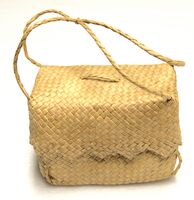 Woven balakbak c. 1910, Guam
 -
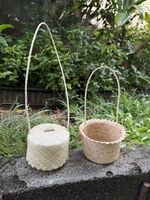 Woven balakbak Nov 2025, James C. Bamba


